

| |
| |
| | 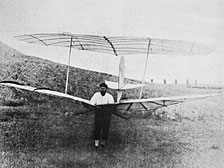 Otto Lilienthal | | Lilienthal and the Wrights In 1896, Wilbur and Orville Wright learned of Otto Lilienthal's death. Each stated that this event spurred on their longtime interest in flight and inspired them to start experiments. Lilienthal's influence on the Wrights was far more than an initial inspiration. They studied his work in detail, and considered him their greatest predecessor. In Wilbur's words: "Herr Otto Lilienthal seems to have been the first man who really comprehended that balancing was the first instead of the last of the great problems in connection with human flight. He began where others left off, and thus saved the many thousands of dollars that it had heretofore been customary to spend in building and fitting expensive engine to machines which were uncontrollable when tried. He built wings of a size suitable to sustain his weight and made use of gravity as his motor... Lilienthal not only thought, but acted; and inso (sic) doing probably made the greatest contribution to the solution of the flying problem that has ever been made by one man. He demonstrated the feasibility of actual practice in the air, without which success is impossible." (McFarland, pp.100-101) The Wrights ultimately called many of Lilienthal's assumptions and data into question, particularly his ideas about control and propulsion, and his tables of lift data. Eventually, aviation would be based on their work, not his. Ever critical of pretenders and false claimants, they nevertheless always acknowledged the achievements Lilienthal had made and the quality and courage of his work. | |
| |