 |
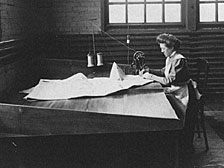
Wright Company seamstress
image credit: Wright State University
|
|
Sewing from the Parlor to the Factory
As the Wright brothers progressed in their flying experiments, the sophistication of the selection and preparation of the fabric improved as well.
Their first machines were covered with French sateen. Wilbur sewed the fabric for the 1900 glider on the front porch of the Tate family home, whom he boarded with during the Wrights' first trip to Kitty Hawk, North Carolina.
The fabric for their first powered machine, flown in Kitty Hawk in 1903, was prepared well in advance. Using the family sewing machine, they stitched up the wing coverings in the front parlor of their Dayton, Ohio home before traveling to the Outer Banks. The fabric they chose was the "Pride of the West" muslin, a tight woven cotton cloth used, as often described, for "ladies undergarments".
When the Wright Company opened for business in 1909, the Wrights employed several full-time seamstresses to follow the patterns, cutting and stitching the wing panels together for the aircraft in production, including Model "B" and Model "C" Flyers. The fabric for these machines was cotton which had been infused with rubber to make them the most airtight, waterproof, and durable of the coverings used.
|
|
